

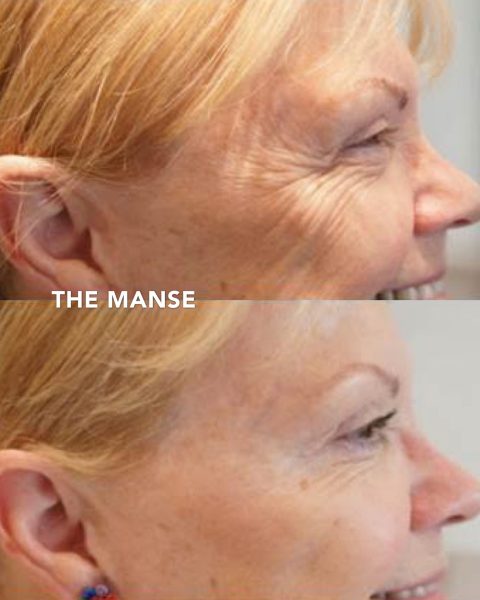
Upper Cheek Lines – Smile Line Softening and Support
Fine lines and deeper creases in the upper cheeks are often linked to facial movement around the eyes and midface. These lines, which appear most prominently when smiling, are the result of repeated expression and gradual changes in skin elasticity and structure over time.
As the skin and deeper tissues lose support, these lines may remain even at rest. They often begin near the outer corners of the eyes—connecting with crow’s feet or under-eye lines—and may extend further toward the lower face with age.
Treatment for Upper Cheek Wrinkling
Addressing this area often involves a combination approach designed to both soften movement-related lines and restore structural support where needed.
1. Movement-Related Line Softening:
Specific techniques are used to help reduce overactive muscle movement in the upper cheek area that deepens lines when smiling.
2. Structural Support:
Gentle volume restoration in the mid-cheek or under-eye area can help support the overlying skin and reduce the appearance of etched-in creases.
Together, these options can help smooth both dynamic (expression-based) and static (at rest) lines while maintaining a natural appearance.
What to Expect in Consultation
During your consultation, your practitioner will discuss and assess the following:
-
Any prior treatments and how you felt about the results
-
The areas that concern you most (under-eye, crow’s feet, or smile lines)
-
Lifestyle factors such as exercise level and metabolism
-
Your preferred outcome — subtle and natural, or stronger softening
-
Any past side effects or muscle sensitivity
A facial analysis will also be performed to check:
-
The depth and pattern of smile lines
-
Skin quality and elasticity
-
Puffiness or hollowing under the eyes
-
How far the lines extend across the cheeks
This helps create a tailored plan that fits your facial anatomy and goals.
Treatment Details
Treatments are performed across specific points in the cheek and outer eye area depending on anatomy and the desired effect.
Some plans may also include mid-cheek or under-eye support to maintain smooth skin transitions and structure.
Comfort Management
-
Topical anaesthetic may be applied about 45 minutes before treatment
-
Cooling is used before and after to reduce discomfort or bruising
-
Nitrous oxide (“happy gas”) is available for relaxation
-
Most patients find treatment well tolerated without additional anaesthetic
During the Procedure
-
The area is cleansed thoroughly with antiseptic
-
Cooling is briefly applied before treatment
-
Small, precise applications are made to target lines and support areas
-
The process usually takes just a few minutes
Many people return to normal daily activities straight away.
Threads as an Alternative
For those looking for a non-filler option, collagen-stimulating threads can help improve the appearance of upper cheek lines by providing gentle structural support beneath the skin.
These threads help encourage collagen production, firming and smoothing the area over time.
Your practitioner will discuss whether threads, skin treatments, or a combination approach best suits your needs and skin condition.
How Will I Look Afterwards?
Most people leave with minimal signs of treatment. You may experience:
-
Mild redness or slight swelling
-
Tiny bumps that fade within hours
-
Minor bruising in some cases
Makeup can usually be worn the next day, and most people return to work immediately after treatment.
Common Risks and Considerations
While treatment in this area is generally well tolerated, possible side effects may include:
-
Temporary redness, swelling, or bruising
-
Mild asymmetry as results settle
-
Temporary tightness or a less natural smile if movement reduction is too strong (rare)
-
Headaches in a small percentage of new patients
-
Minor infection risk (rare)
All potential risks and aftercare instructions will be discussed during your consultation.
Post-Treatment Guidelines
To support comfort and recovery:
-
Avoid makeup for 4 hours
-
Do not lie down for 4 hours
-
Avoid intense exercise that day
-
Avoid massaging the area
-
Skip acid-based or exfoliating skincare for 24 hours
Results Timeline
-
Some changes may begin within 2–8 days depending on treatment type
-
Full results are generally seen around 4 weeks
-
A review is recommended at 4 weeks after your first session
Asymmetry or Unevenness Early On
If you notice one side settling faster than the other, there’s no need to worry — mild unevenness is common in the first few weeks and usually resolves by the review appointment.
Longevity of Results
Results vary depending on metabolism, movement, and treatment plan.
Typical pattern:
-
Noticeable effect at 3–4 weeks
-
Gradual softening by 8–12 weeks
-
Most results fade by 16 weeks
Maintenance treatments are often recommended every 3–4 months for certain options, while collagen-stimulating treatments like threads may last up to 1–2 years.
Complementary Treatments
To enhance results and skin quality, consider combining with:
-
Microlaser Peel
-
Fractional Laser
-
Skin Hydration Boosters
-
Midface Volume Restoration
Your practitioner will guide which combination best suits your goals.
Pricing
Please refer to our pricing page for full cost details on upper cheek line treatments.
Frequently Asked Questions – Upper Cheek Lines
1. What causes upper cheek lines?
These lines develop from repeated facial movement, reduced skin elasticity, and gradual changes in facial structure.
2. Are there non-surgical treatments for these lines?
Yes — options may include muscle relaxation, volume support, or collagen-stimulating threads depending on the individual.
3. Is there downtime?
Downtime is usually minimal. Mild redness or swelling can occur and typically resolves within a few days.
4. How long do results last?
Duration varies. Some treatments last several months, while collagen-stimulating options can last longer.
5. Can I combine this with other treatments?
Yes — it’s often paired with under-eye, midface, or skin rejuvenation treatments for balanced results.