
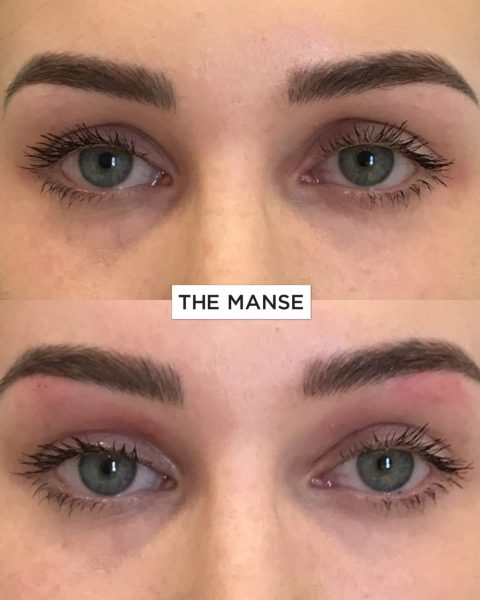

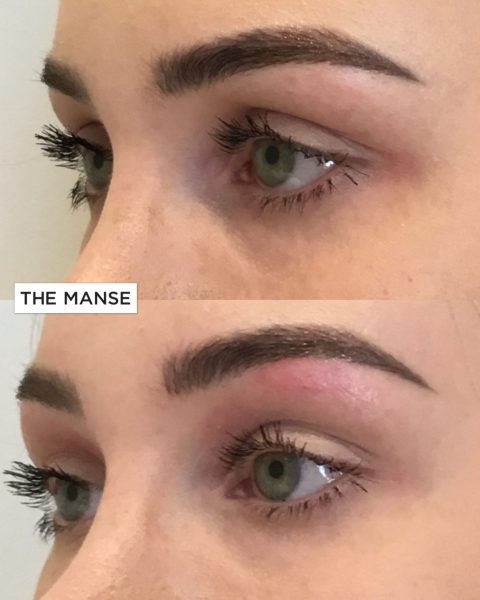


Upper Eyelid Volume & A-Frame Correction Treatments
The Manse Clinic, Sydney CBD & Paddington
The eyes tell so much of our story — energy, emotion, youth.
When the upper eyelids lose their natural fullness, they can make the face appear tired or aged even when we feel vibrant inside. At The Manse Clinic, we offer doctor-led treatments designed to restore gentle volume and shape to the upper eyelids, giving a refreshed, harmonious look.
Understanding Upper Eyelid Ageing
One of the earliest signs of facial ageing is the loss of volume in the upper eyelid. The skin here is fine and delicate, so even subtle changes in fat, bone and soft tissue support can create visible hollowness — sometimes called an “A-frame” appearance.
Some people are naturally born with hollow upper eyelids, while others develop it over time. In both cases, restoring balance to this area can make the eyes appear brighter and more youthful.
What Is an A-Frame Correction Treatment?
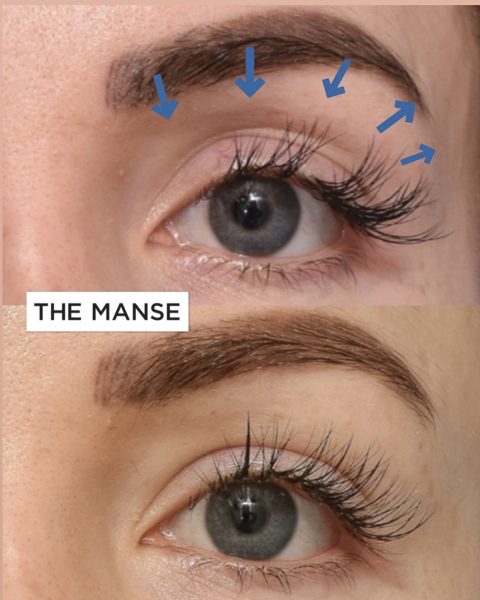
This treatment focuses on replacing lost volume in the upper eyelid to soften hollowness and create a smooth contour from the brow to the lash line.
Your own fat or other suitable volumising materials may be used, depending on your assessment.
Because the eyelid area is so delicate, results are built gradually over several sessions for safety and precision. Most patients require a series of around three sessions, spaced approximately one month apart, to reach their desired level of fullness.
Your Consultation
During your consultation, your practitioner will:
-
Assess your eyelid shape, skin quality, and facial balance
-
Review your medical history and goals
-
Develop a conservative, tailored plan
Because this area is highly refined, a subtle approach is essential. Treatments are spaced to allow natural settling between sessions.
Comfort & Pain Relief
Most patients find the procedure comfortable. Depending on the approach:
-
A numbing cream may be applied before treatment
-
Local anaesthetic or ice can be used to reduce discomfort and bruising
-
Nitrous oxide (happy gas) is available if desired
The Procedure
-
The area is cleansed with antiseptic.
-
Ice may be applied briefly for comfort.
-
A fine cannula or micro-instrument is used to deliver the treatment beneath the skin.
-
Gentle pressure and cooling are applied afterward to minimise swelling.
The appointment is typically short, and most patients return to normal activities soon after.
Aftercare
After upper eyelid rejuvenation, it’s normal to have some redness or swelling for a few days.
For best recovery:
-
Avoid makeup on the area for at least 4 hours
-
Skip heavy exercise for the rest of the day
-
Avoid saunas, spas, or hot yoga for 1 week
-
Avoid active skincare acids for 24 hours
Swelling usually subsides within 2–3 days, though a small amount of puffiness may linger for a couple of weeks.
Common & Rare Side Effects
All medical procedures carry risks. Your doctor will discuss these thoroughly during your consultation.
Possible temporary effects include:
-
Redness, swelling, or bruising
-
Mild asymmetry as swelling resolves
Rare but serious risks include infection, skin injury, or visual disturbance. Because of this, The Manse Clinic requires a consultation and a minimum one-week consideration period before any upper eyelid treatment is performed.
Asymmetry and Review
Upper eyelids are rarely perfectly symmetrical to begin with. After treatment, one side may appear different due to normal swelling or bruising. This often evens out naturally.
Your doctor will review the area about 4 weeks later to assess the result and decide whether additional refinement is required.
How Long Do Results Last?
Longevity varies by anatomy, metabolism, and number of sessions.
In many cases, upper eyelid volume support lasts longer than other areas of the face — sometimes for several years.
Your practitioner will advise an ongoing plan, typically with maintenance once or twice a year.
Cost Information
Due to Australian regulations, detailed pricing cannot be displayed online.
Please see our Pricing Page or book a consultation for a personalised quote.
Most patients require three sessions for optimal improvement.
Why The Manse
At The Manse, our philosophy is precision and restraint — achieving beauty through balance.
Upper eyelid rejuvenation is one of the most artistically demanding areas of facial design, and our team combines technical expertise with aesthetic sensitivity to help you look refreshed, rested, and naturally beautiful.

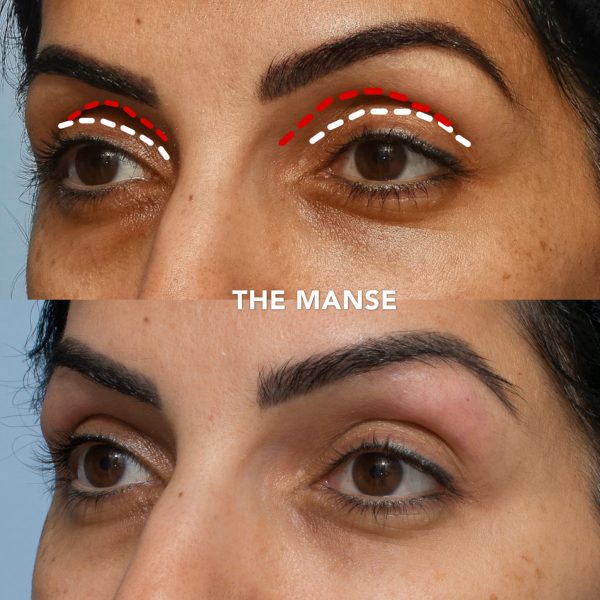
The patient’s upper lid line is drawn in red. The aim of the treatment is to move the upper lid line to the white line, which is exactly what was achieved


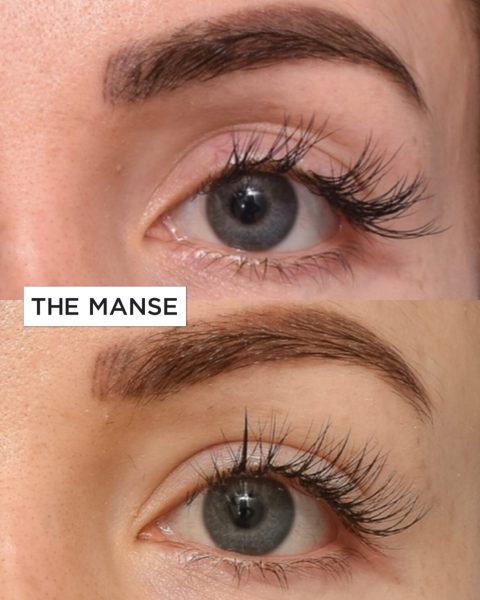
FAQs
1. What causes upper eyelid hollowing?
Upper eyelid hollowing can occur naturally or develop over time due to changes in fat, bone, or soft tissue support. Ageing and genetics are the most common contributing factors.
2. How many sessions will I need for upper eyelid rejuvenation?
Most patients require a series of around three sessions, spaced approximately one month apart. This gradual approach ensures precision and safety in such a delicate area.
3. What is recovery like after upper eyelid treatment?
Mild redness or swelling can occur for a few days. Most patients can return to normal activities soon after treatment. Following aftercare instructions helps minimise downtime.
4. Is the procedure painful?
Most patients find the treatment comfortable. Numbing cream, local anaesthetic, or ice may be used. Nitrous oxide (“happy gas”) is also available if desired.
5. How long do results last?
Results vary between individuals but can last several years, depending on anatomy, metabolism, and the number of sessions completed. Maintenance once or twice yearly is often recommended.
6. When will I see results?
Improvements are gradual, with visible changes developing over several sessions as the area naturally settles and the shape refines.