
Face Design – How Do Practitioners Determine How to Make You Beautiful?
Here we ask one of our practitioners to explain their approach to face design:
Our practitioners are trained in medicine and nursing, which gives them a clinical skillset with strong ethical codes. They have studied in-depth human anatomy and physiology while applying the highest standards of science in research and statistics. They take these attributes and apply them to each face they assess in aesthetic medicine. While their clinical skillset ensures safety and precision, they also work closely with you to design and plan your individual goals.
Beauty is subjective, and each face is unique. A thorough history, examination, facial assessment and discussion are vital as the first step of the beautification journey. But what does the practitioner look for and consider to make this all possible?
Is It Really All About Phi / The Golden Ratio?
In the background of cosmetic assessment is something known as the golden ratio or “phi.” The golden ratio (1:1.618) is a mathematical formula that has existed since ancient times and has been used in many famous works of art and architecture such as Leonardo da Vinci’s Mona Lisa and Vitruvian Man.
It represents proportions that are often perceived as balanced and harmonious. While not everyone’s idea of beauty aligns with this concept, it provides a framework that can help guide facial assessment in aesthetic practice. Of course, not every face fits this ratio — nor should it — as individual character, ethnicity, and personal preferences all play a defining role.
The Most Important Part: What Matters to YOU
The first part of the face design consultation is discovering what matters to you.
The General Impression
During your consultation, your practitioner will first gain an initial impression of your overall facial appearance — including skin quality such as laxity, texture, pigmentation, and general face shape (oval, round, square, triangle, or heart).
They will also observe any features such as fine lines, areas of volume loss or hollowing (for example, under the eyes), and overall light reflection of the skin. Smoothness, tone, clarity, and symmetry are all considered in this initial overview.
Getting Down to Specific Angles and Proportions
Your practitioner will then conduct a more specific analysis of your facial proportions, using horizontal thirds and vertical fifths to assess balance and harmony. This helps identify areas that may benefit from refinement or subtle enhancement.
A profile assessment may also be performed — determining whether your side profile is convex, concave, or straight — while considering the proportions of the nose, lips, and chin. Terms such as the Ricketts line, nasomental angle, 1:1.6 lip ratio, and ogee curve (the soft S-shaped curve of the cheek often associated with youth) may be discussed.
For some patients, an assessment of the submental area and neck is also included. Your practitioner may evaluate factors such as skin firmness and muscle activity in the neck to provide a complete understanding of facial balance.
Finally, they will discuss the findings with you — starting with bone structure, then muscle, fat, and skin — forming the foundation for your personalised aesthetic plan.
A variety of non-surgical treatment options may be discussed depending on your individual needs and suitability. These may include approaches that address facial asymmetry, expression lines, changes in contour, or overall skin quality. All recommendations are made in line with medical assessment and Australian regulations.
While that may sound detailed, it’s a quick and collaborative process. Your practitioner can perform this full analysis within minutes while discussing your goals with you.
It’s also important to remember that beauty means different things to different people — culture, heritage, and personal taste all play a role. The key to achieving the best version of your own beauty is trusting your practitioner, taking a whole-face approach, and working progressively toward your desired result.
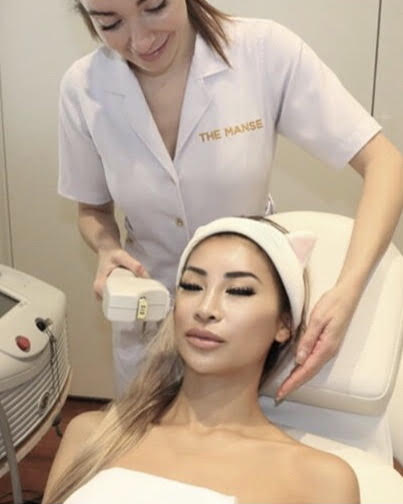
Skin Design Consultation
A Skin Consultation with a Therapist will involve:
1. Skin History
Your past skin concerns, previous treatments, and current skincare routine will be discussed, along with what improvements you would like to see.
2. Skin Examination
Your therapist will assess various aspects of your complexion, such as:
-
Spots
-
Pores
-
Evenness (tone variation)
-
Redness
-
UV spots (sun-related changes)
-
Fine lines or wrinkles
3. Treatment Plan
Based on the findings, treatment options will be discussed and a plan formed to suit your skin’s condition and your goals.
Part 1 – How Do I Know Where I Should Get Treatment in My Face?
A good place to start is thinking about which areas of your face you’d like to discuss with your practitioner.
Ask yourself:
-
How do you like your photos taken — straight on, or from a particular angle?
-
Do you prefer one side of your face in photos?
-
Do you use makeup to alter shape, such as overlining your lips for fullness?
With age, structural changes naturally occur. Bone and fat volume reduce over time, causing changes in definition and support. Collagen and elastin levels also decline, and lifestyle factors such as sun exposure, smoking, or significant weight loss can influence this process.
Usually around the age of 30, these changes may start to become noticeable. Your practitioner can assess your unique features and discuss where you might begin your treatment journey.
For many people, the midface (cheeks) is often the first area considered, as restoring balance here can have an overall lifting and harmonising effect. From there, the lower third of the face may be reviewed — including the jawline and chin — to refine definition and symmetry.
Other concerns, such as lip volume or under-eye hollowness, can also be addressed if appropriate following consultation. Each plan is fully customised based on anatomy, goals, and safety.
Remember — just because a friend achieved their result in one or two sessions doesn’t mean your process will be identical. Every face is unique, and the number and type of treatments will vary accordingly.
Before your consultation, we encourage you to look at before-and-after examples on our site and note any features that resemble yours — such as lip shape, face shape, or under-eye structure — to help you better communicate what you like.
If you’re unsure, don’t worry — your practitioner will take the time to guide you through your options and create a plan that feels right for you.

FAQs — Face Design & Skin Consultation
1. What is a face design consultation?
A face design consultation is a detailed assessment where your practitioner reviews facial structure, proportions, and skin quality, then discusses your goals to create a tailored plan.
2. How is “beauty” assessed?
Practitioners consider natural proportions, symmetry, and balance while taking into account your individuality, ethnicity, and personal preferences.
3. What is the golden ratio in aesthetics?
The golden ratio (1:1.618) is a mathematical guide that can assist in assessing facial balance. It’s used as a reference, not a strict rule for beauty.
4. What happens during a consultation?
Your practitioner will take a detailed history, examine your face, discuss your goals, and suggest treatment options suited to your needs.
5. Is a consultation suitable for everyone?
Yes, consultations are open to anyone interested in improving facial balance, skin quality, or overall appearance. Suitability for any treatment is always assessed first.
6. How long does a consultation take?
Most consultations take less than 30 minutes and include assessment, discussion, and planning for your aesthetic goals.
7. What makes each consultation different?
Every face and idea of beauty is unique — your consultation focuses on your definition of confidence and what looks natural to you.